
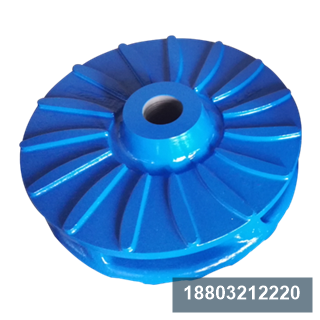
Impeller
The core energy-transfer component, with hub, front and back shrouds and vanes. Closed, semi-open or open designs; in high-chrome alloy, wear rubber or polyurethane.
The core energy-transfer component, with hub, front and back shrouds and vanes. Closed, semi-open or open designs; in high-chrome alloy, wear rubber or polyurethane.
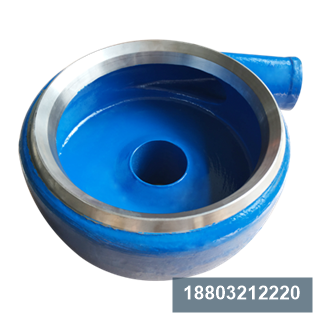
Collects slurry discharged by the impeller and converts kinetic energy to pressure; a replaceable liner that protects the outer casing when worn through.
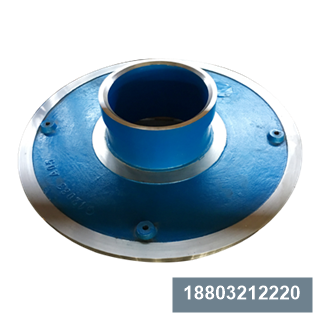
Inlet-side wear plate maintaining fit-up clearance with the impeller eye, absorbing inlet particle impact; replaced as a set with impeller and volute liner when worn.
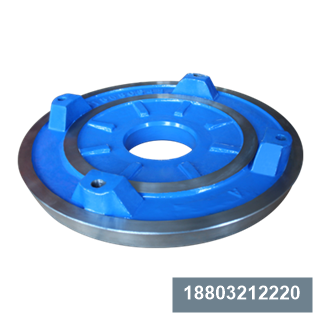
Wear plate behind the impeller, balancing backflow wear and reducing slurry scouring toward the back cover and seal area.
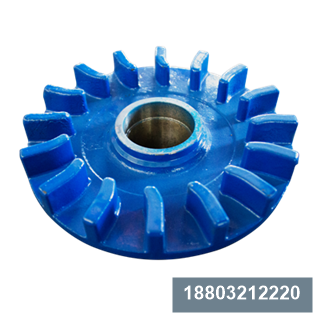
Mounted behind the main impeller, it generates reverse centrifugal pressure during operation to stop slurry leaking along the shaft; packing seal backs it up at standstill. It is a separate part from the relief cover.
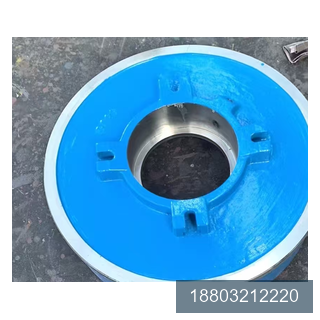
The relief cover sits behind the shaft seal, working with the expeller and stuffing box to close the seal chamber and direct flush water and slurry; it is a cover part separate from the expeller, supplied by pump model.
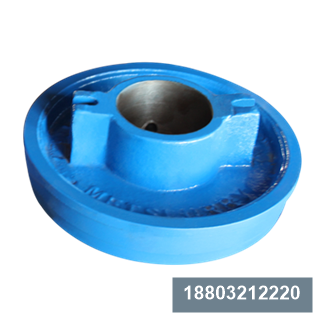
Holds the seal packing and flush-water connections; works with the expeller and seal structure to balance seal-chamber pressure and keep particles out of the seal area.
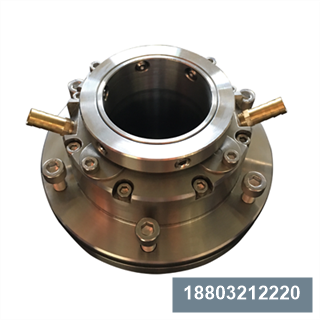
A seal assembly replacing packing seal, with low face leakage for duties where shaft-seal leakage must be tightly controlled.
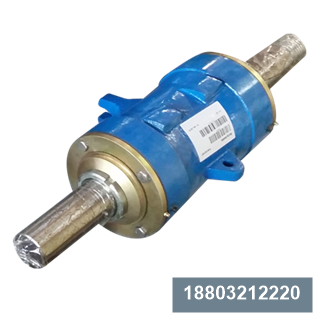
Bearing housing, bearings and locking parts supplied as a set or standalone repair spare, maintaining rotor rigidity and alignment.
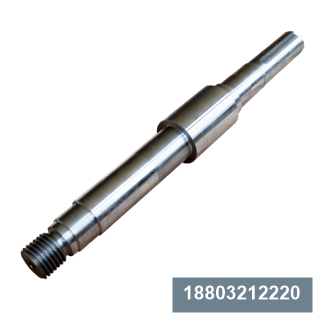
The torque-transmitting drive part fitted with bearings, impeller and sleeve; replaced individually when worn or damaged to preserve rotor concentricity and balance.
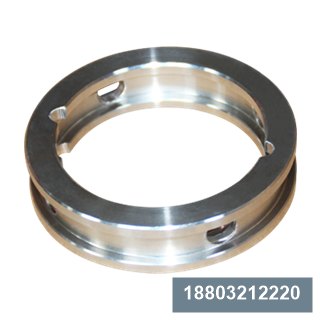
Sits inside the packing chamber to distribute flush water evenly, forming a water film at the seal to block slurry intrusion and lubricate the packing.
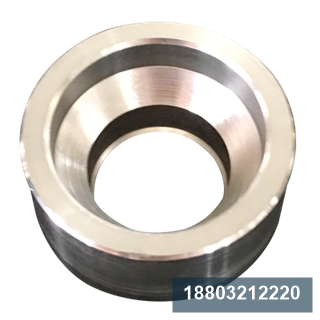
Rotor axial locating and clearance adjustment part, setting the fit-up gaps between impeller, bearings and liners during assembly and overhaul.
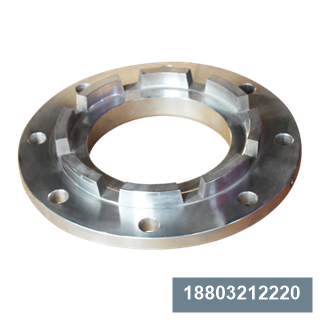
Seals the bearing housing and shaft end; together with oil seals and fasteners it protects the bearing chamber against dust, slurry and moisture.
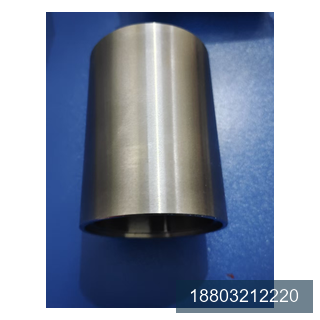
Protects the shaft where it passes through the stuffing box from particle wear and corrosion. Replaced separately when worn, without replacing the whole shaft; matched to pump model and shaft diameter.
Spares cover the main wear areas of the pump end; material and structure are matched to the duty. Wet-end parts are formed by casting, heat treatment and machining, with control over hardness, fit-up dimensions and wear life. Metal and rubber liners can be supplied separately, and liners can be replaced individually.
Grouped from our spare-parts ledger by category, showing typical parts, common materials and models covered; open a spare category page to see every part's name, part code (drawing number), material and compatible pump model.
| Spare Category | Typical Parts | Main Materials | Models Covered |
|---|---|---|---|
| Impeller | Impeller, alloy impeller, rubber impeller | Grey cast iron, High-chrome wear alloy, Carbon / alloy steel, Stainless / cast steel, Wear rubber | 197 pump models |
| Volute Liner | Volute liner, rear casing liner, cover liner | Wear rubber, High-chrome wear alloy, Carbon / alloy steel | 69 pump models |
| Front Liner | Front liner, spiral front liner | Grey cast iron, High-chrome wear alloy, Wear rubber, Stainless / cast steel, Ductile iron | 103 pump models |
| Rear Liner | Rear liner, rubber-lined rear liner | Grey cast iron, High-chrome wear alloy, Wear rubber | 123 pump models |
| Expeller (Rear Impeller) | Expeller, expeller A05/A07, stainless expeller | Grey cast iron, High-chrome wear alloy, Wear rubber, Carbon / alloy steel, Stainless / cast steel | 58 pump models |
| Relief Cover | Relief cover, rubber relief cover, relief cover A05/A07 | Grey cast iron, High-chrome wear alloy, Wear rubber, Carbon / alloy steel, Stainless / cast steel | 54 pump models |
| Stuffing Box | Stuffing box | Grey cast iron, Stainless / cast steel, Ductile iron | 119 pump models |
| Mechanical Seal | Seal ring, mechanical seal body, seal gland | Grey cast iron, Stainless / cast steel, Copper alloy | 37 pump models |
| Pump Shaft | Shaft, transmission shaft, intermediate shaft, coupling shaft | Carbon / alloy steel, Wear rubber, Grey cast iron, Stainless / cast steel | 191 pump models |
| Shaft Sleeve | Shaft sleeve, short sleeve, long sleeve, ceramic sleeve | Stainless / cast steel, Carbon / alloy steel, Grey cast iron, Ceramic, Copper alloy | 181 pump models |
| Water Seal Ring | Water seal ring, front water seal ring | Grey cast iron, Stainless / cast steel, Carbon / alloy steel | 137 pump models |
| Locating Sleeve | Locating sleeve, thrust sleeve, locating ring | Carbon / alloy steel, Stainless / cast steel, Grey cast iron | 114 pump models |
| End Cover / Gland | End cover, bearing gland, seal gland, bottom cover | Grey cast iron, Carbon / alloy steel, Stainless / cast steel, Wear rubber, Ductile iron | 191 pump models |
| Bearing Assembly | Bearing housing, pedestal, bearing body, guide bearing seat | Grey cast iron, Ductile iron, Carbon / alloy steel, Copper alloy, Stainless / cast steel | 180 pump models |
| Other Spares | Gaskets, O-rings, fasteners, coupling, pipe fittings | Grey cast iron, Carbon / alloy steel, Wear rubber, Ductile iron, Stainless / cast steel | 200 pump models |
Material selection depends on particle hardness and shape, slurry corrosion, temperature, concentration and impact loading.
| Material | Performance | Suitable duties | Limitations |
|---|---|---|---|
| High-chrome white iron A05 / Cr26 / Cr27 | High hardness (HRC 58–62), resists coarse-particle impact and scouring, good high-temperature performance | Gravel, ore, coarse-particle slurry and high-temperature slurry — the mainstream metal wet-end material | Not resistant to strong acid / alkali corrosion; heavier casting; higher cost than rubber parts |
| A49 / Cr30 wear-corrosion alloy | Balances wear and corrosion resistance, better chloride erosion resistance | FGD slurry, mineral slurry containing corrosive components or chlorides | Higher cost than standard high chrome; must be checked against medium composition |
| Natural rubber / NBR | Elastically cushions particle impact, resists weak acid/alkali and cavitation; smooth surface resists buildup | Fine-particle, non-sharp slurry: coal slime, fine tailings, chemical dilute slurry; service life can outlast alloy in fine-particle duties | Medium temperature generally ≤80℃; vulnerable to sharp large particles; bonding layer must be reliable |
| Polyurethane PU | Better fine-particle wear than rubber; high strength, light weight, smooth low-buildup surface | Fine sand, mud and other low-impact fine-particle slurries | Not heat resistant; limited resistance to hard-object impact; large parts are harder to form |
| Stainless steel 304 / 316L / duplex | Acid-alkali corrosion resistance, smooth finish; pitting resistance improves with grade | Chemical dilute slurry and corrosive media where corrosion dominates over abrasion | Limited wear resistance; unsuitable for high-concentration hard-particle duties |
For sharp, hard particles such as cobbles, gravel, quartz sand and large ore, prefer high-chrome alloy liners to avoid rubber splitting or puncture.
For non-angular slurry such as fine sand, coal slime and fine tailings, rubber liners cushion wear elastically, build up little and are often more cost-effective.
For slurry containing chlorides, acid or alkali (e.g. FGD duty), prefer wear-corrosion alloy or corrosion-resistant rubber; duplex stainless steel may be required.
Pump model, drawing or used-part photo / dimensions
Verify fit-up dimensions, clearances and material
Rough casting and heat treatment for hardness and metallurgy
Machined to accuracy and checked for interchangeability
Packed, dispatched with follow-up replacement support
Yes. Provide the full pump model (discharge size + series + impeller diameter code) and duty; we can cross-check the required impeller, volute liner and frame plates against our reference. If the model is unclear, a photo or key dimensions of the used part can help identify it.
Single parts or complete kits are both possible. If volute liner and frame plates show noticeable wear, we recommend replacing them together with the impeller to avoid mismatched wear rates that unbalance clearances and shorten life. The scope can be decided from inspection results.
Under the same casing model, rubber and metal liners are normally installed position-by-position with matching dimensions; the exact interchangeable combination must be confirmed against casing structure and impeller design before ordering.
Watch for obvious drops in flow and head, changes in current, increased leakage or abnormal vibration and noise. At overhaul, check impeller-to-liner clearance, liner wall thickness and vane thinning; replace when approaching wear limits or when cracks or perforation appear.
Send the pump model, part name or used-part photos / dimensions; we will check material and interchangeable sizes.